
Ryan Gallagher, LAc, DSOM
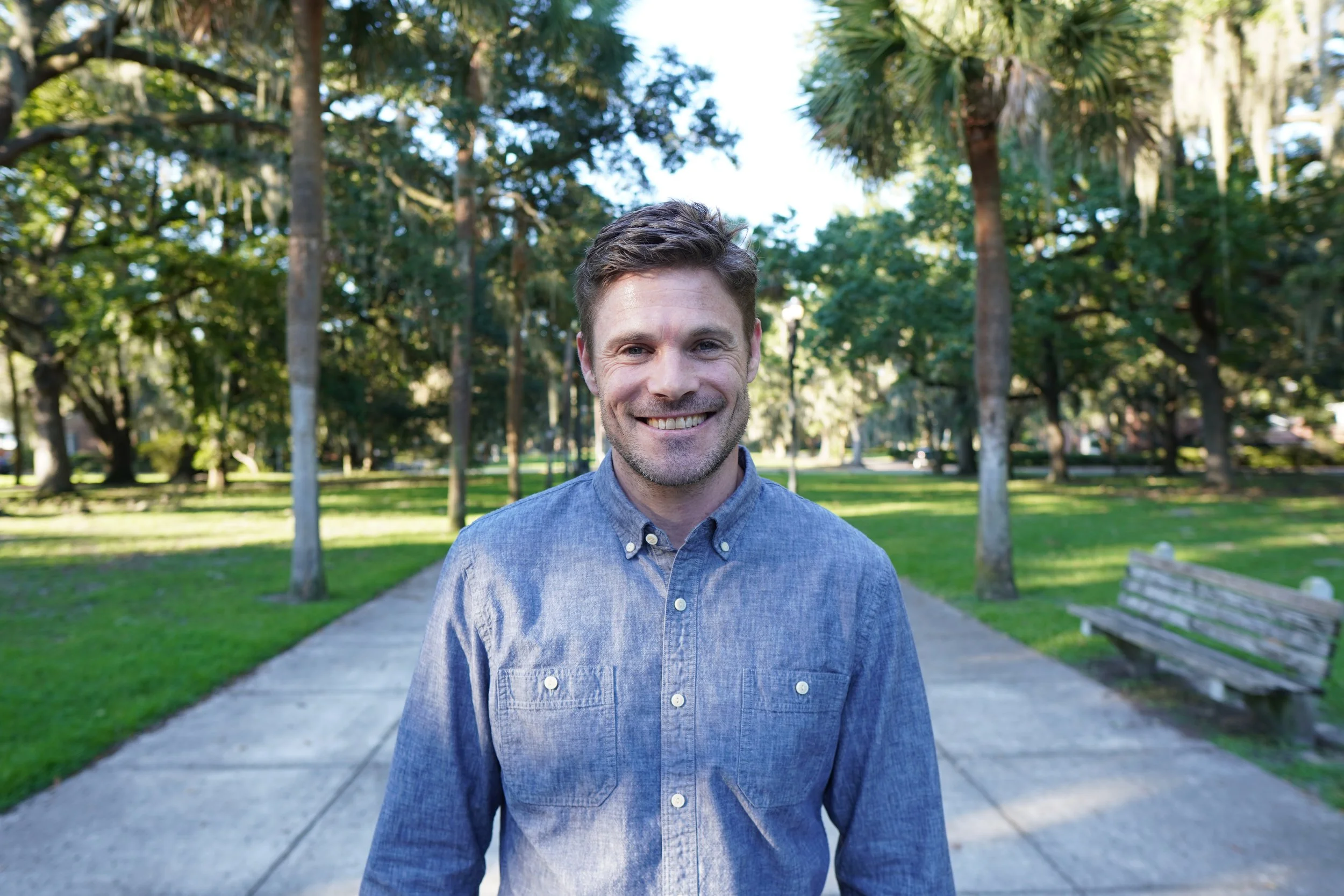
Hi there! I’m Ryan. I’m a somatic guide, licensed acupuncturist, and instructor of meditation and Qigong.
Here are a few of my qualifications:
• Bachelor of Arts (BA), Georgetown University, Washington, DC
• Doctor of Science in Oriental Medicine (DSOM), National University of Natural Medicine, Portland, Oregon
• Licensed acupuncturist (LAc)
• Tao of Trauma graduate
• Somatic Experiencing trainee
As a young adult, a personal history of trauma and illness led me to explore a variety of healing systems. This path began with a couple years in a Buddhist monastery in upstate New York, studying meditation.
From there, I traveled to Oregon for training in Heiner Fruehauf’s rigorous Traditional East Asian Medicine doctoral program at the National University of Natural Medicine. Here, I studied with masters of acupuncture, herbalism, and Qigong. Upon graduation, I was awarded “Best Capstone Project” for my work on the treatment of trauma with traditional medicine.
Over the course of a decade, I practiced traditional East Asian medicine in Maine, North Carolina, and Georgia. During that time, I also immersed myself in the world of somatics, which is the practice of regulating the nervous system through body-based awareness.
These days, somatics has become my primary focus. I help clients untangle chronic stress and trauma by using the somatic techniques of the Tao of Trauma and Somatic Experiencing models.
To learn more about sessions with me, click here. (And make sure to subscribe to my newsletter to stay up-to-date on my offerings!)
Whatever form of “dysregulation” you’re dealing with—whether it’s anxiety or depression, physical pain or digestion problems, sleep issues or any other disturbance—I aim to support your body-mind system, helping you move in the direction of health and well-being.

Traditional East Asian Medicine
I’ve been studying traditional East Asian medicine since 2009, learning from renowned teachers like Heiner Fruehauf, Joon Hee Lee, and Bob Quinn. Recent influences on my approach include Thomas Sorensen (Japanese Meridian Therapy), Alaine Duncan (trauma-informed medicine), and Damo Mitchell (Neigong). I’ve been in practice since 2017.
At the heart of traditional East Asian medicine are the Five Elements. Early Chinese Daoists explored the human psyche and recognized five distinct patterns, which became known as Water, Wood, Fire, Earth, and Metal. These elemental gestures are active at all levels of existence, from the lifespans of the smallest organisms to the changing of the seasons to the movements in the heavens above.
In the human being, each of the Five Elements correlates with certain internal organs, body regions, emotions, and more. When the cycle of the elements goes awry, we experience disharmony in our bodies and minds. My role is to be sensitive to the Five Elements in each individual client, and to provide the appropriate support to help re-establish the smooth flow of the cycle, so that the person can feel resourced and whole.
These days, I use the style of acupuncture known as Japanese Meridian Therapy, a gentle yet effective approach. Learn more about my acupuncture sessions on the Sessions page.

Polyvagal Theory
Polyvagal theory tells us that our nervous system has three states:
1. Connection (where we feel safely engaged with our life)
2. Hyper-arousal (where we get really ramped up)
3. Hypo-arousal (where we feel shut down and disconnected)
When we’re feeling unsafe, we move into hyper-arousal or hypo-arousal; they help us defend ourselves against a perceived threat. So, we can think of these two states as “protection mode.” It’s here, in protection mode, that we experience the survival responses of fight-or-flight, freeze, and collapse.
On the other hand, “connection” refers to the state of feeling safely engaged with our life—with our own inner experience; with our outer environment; and with other nervous systems. It’s here, in connection mode, that we can access ease, security, belonging, wholeness, vitality, and resilience.
Both connection and protection are essential. However, many of us get stuck in protection mode. This leaves us feeling “too up” or “too down”—chronically anxious or depressed. The nervous system has “forgotten” its capacity for feeling safely connected.
My somatic sessions are designed to support you in building new pathways into safe connection. My role is to help you “remember” how to make connection mode your home, using body-based awareness exercises and touchwork.
This approach stems from my many years of exploration in the healing arts, including my training in the Tao of Trauma and Somatic Experiencing systems.
I’ve written a series of articles on polyvagal theory here. And I have an online polyvagal course called Homecoming, which you can check out here!

The Meditative Arts
I’ve been studying and practicing meditation since 2004, when I began a two-year residency at a Buddhist monastery.

To me, stabilized attention is the most important skill that a person can develop. When our awareness is stable, we start seeing things more clearly. And when we see clearly, we make wise decisions—decisions that serve our well-being and the well-being of those around us.
I help clients hone this skill of stabilized attention—in particular, I help them develop the capacity to really “listen” to their bodies. Becoming deeply attuned to one’s own body can be an essential part of the healing process.
I offer instruction in both meditation and Qigong (a form of mindful movement), in individual sessions as well as in group classes. Learn more on the Sessions page. (Oh, and I also offer an online Qigong course called Elemental Movements, which you can find here.)
Intrigued? Learn more!
